Emory’s digital humanities community unites students and faculty across the disciplines to explore what data and technology reveal about the human experience. With a dedicated Center for Digital Scholarship, expert staff, and faculty ranging from literary studies to African American studies to film and media and beyond, we’re building one of the field’s most diverse and impactful research communities.
Emory’s digital humanities community unites students and faculty across the disciplines to explore what data and technology reveal about the human experience. With a dedicated Center for Digital Scholarship, expert staff, and faculty ranging from literary studies to African American studies to film and media and beyond, we’re building one of the field’s most diverse and impactful research communities.
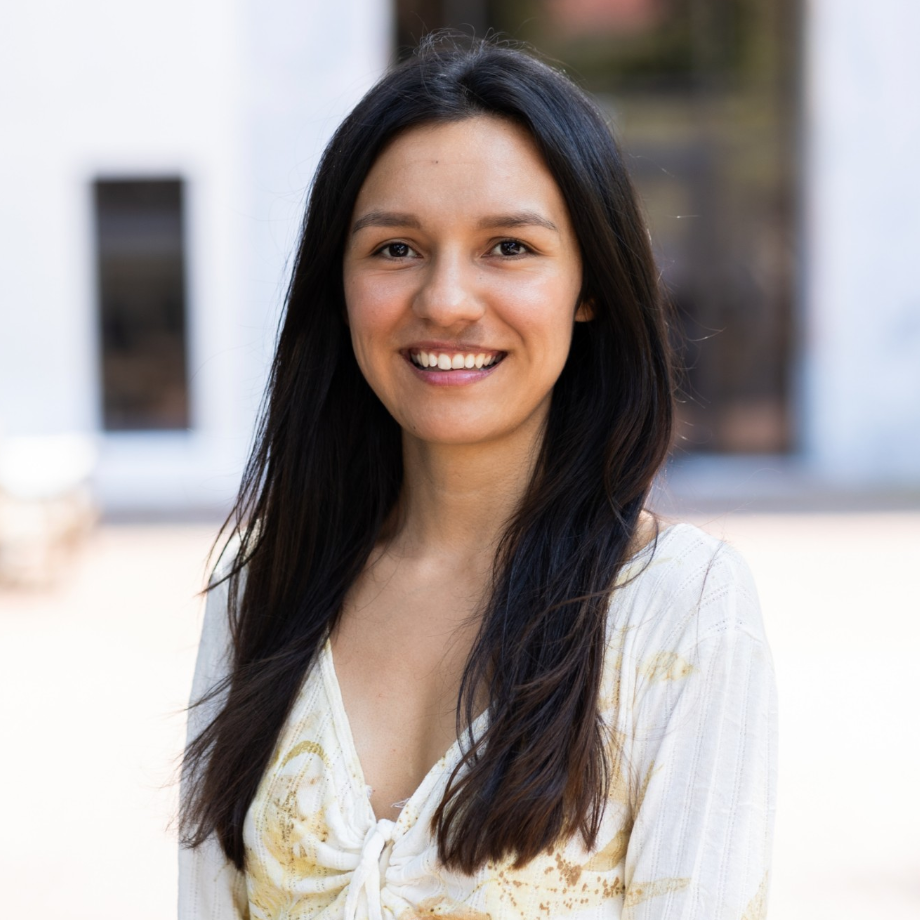
Diana Duarte is a Ph.D. candidate in Hispanic Studies at Emory University’s Department of Spanish and Portuguese. Her dissertation research employs network analysis to trace the formation of women’s intellectual networks in Brazil and Colombia (1870–1930) through literary journals, mapping transnational and local connections among contributors and editors. By combining digital humanities methods with close reading, her work examines how these networks shaped debates on female identity, education, and citizenship, revealing how women negotiated their roles amid shifting social and political contexts.
As part of the AI and Social Movements project (a project of Dr. Lauren Klein’s Digital Humanities Lab), she explores the applications and limitations of AI in studying historical and contemporary social movements. Beyond her research, Diana serves as a Digital Scholarship Assistant at the Emory Center for Digital Scholarship, where she has collaborated in different projects such as Sounding Spirit, Open World Atlanta, Apollo 15, and also as an instructional designer for their ECDS Training Program.
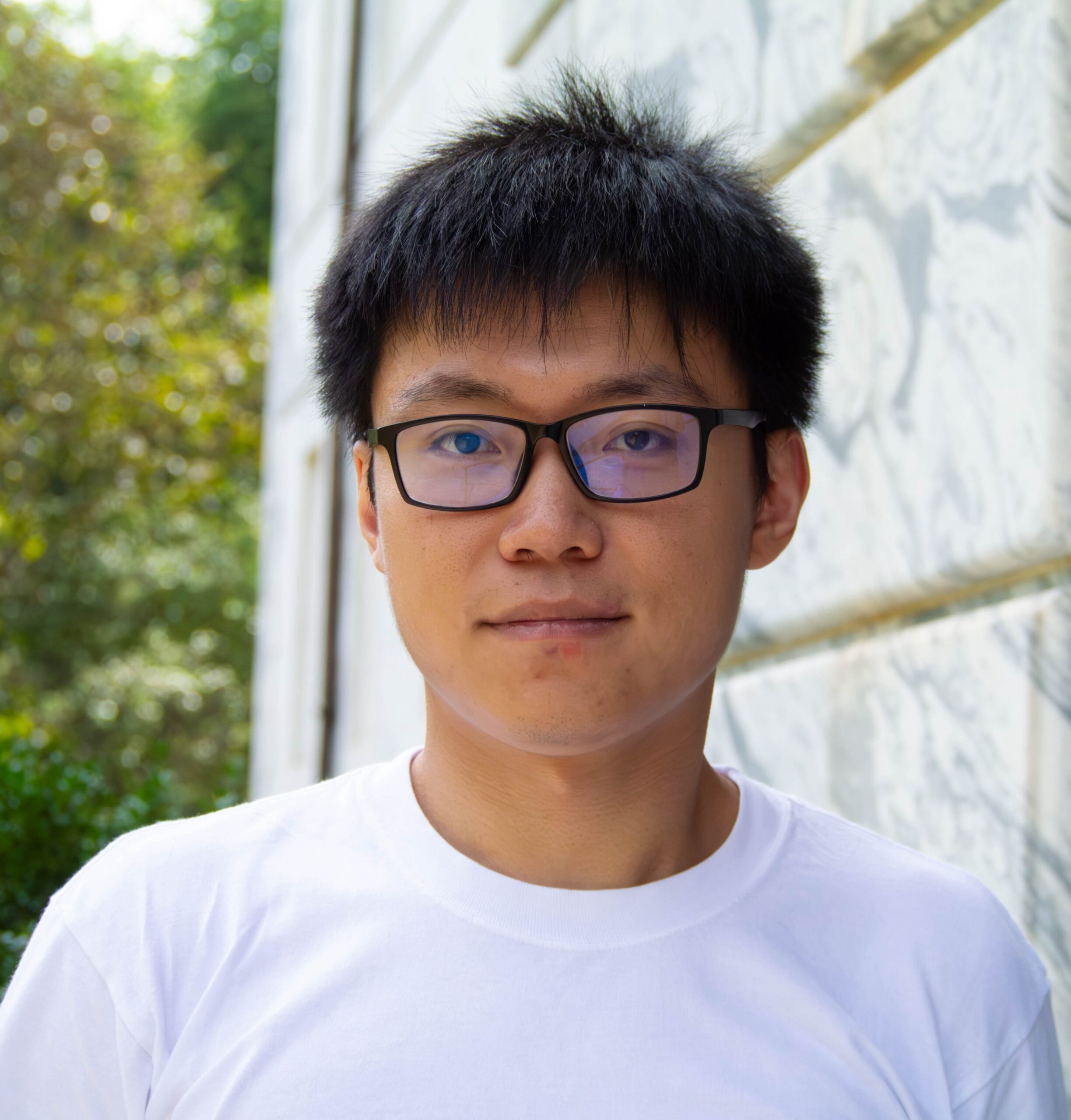
Shiyao Li is a Ph.D. candidate in Computer Science at Emory University. His research explores how human/visualization design factors shape visualization interpretations through the lens of confirmation bias. Specifically, he looks into three questions:
Beyond his dissertation research, Shiyao has contributed to Data by Design (a project of Dr. Lauren Klein’s Digital Humanities Lab) as a data visualization researcher. His work on the project has included prototyping interactive visualizations related to the Slave Voyages database intended to honor the lives of the enslaved, and developing a dashboard to reveal the visible and invisible labor involved in creating Data by Design. Shiyao has also worked as a Data Science Intern at TikTok, where he developed a knowledge system for an internal AI agent designed to help engineers diagnose and resolve software bugs more efficiently.
![Headshot-Profile[1914]](https://dhatemory.ecdsdev.org/wp-content/uploads/2026/07/Headshot-Profile1914-e1784828402916.jpg "Headshot-Profile[1914]")
Brenda Umutoniwase is a PhD student in African American Studies at Emory University. Her dissertation research is at the intersection of Black critical theory, critical philosophies of race, Genocide Studies, ecological thought, and Sound Studies. Her current research examines what makes genocide, as the ultimate form of violence, thinkable, and what occurs at the convergence of genocide and blackness.
As part of the Sounding Spirit Collaborative, she serves as the Digital Production Associate. Here she contributes to the creation of the digital library with tasks, ranging from the collection of basic metadata, testing the functionality of the tools & navigability of the digital library, as well as accessibility of the collections.
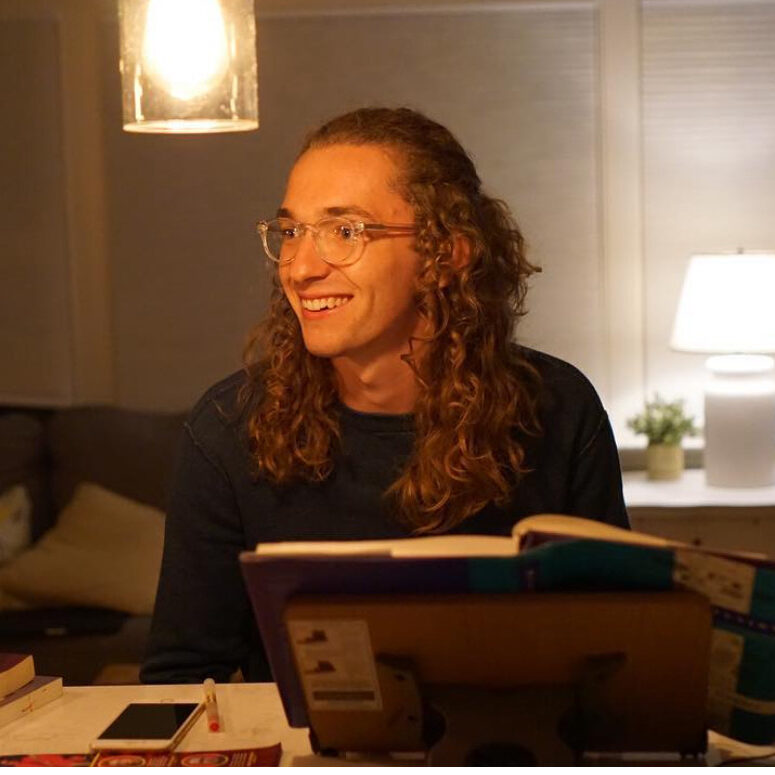
Patrick Pender is a PhD candidate in Philosophy and a Dean’s Teaching Fellow at the CFDE. He holds an MA in Philosophy from Duquesne University (2020) and an AB in Government from Harvard College (2017). Patrick’s dissertation explores the origins of consciousness. His research and pedagogy are informed by his background in psychoanalysis. In May 2024, Patrick graduated from the Emory University Psychoanalytic Institute’s Core Program. He is currently in formation as a psychoanalyst in the Lacanian orientation.
As a Digital Production Associate at Sounding Spirit, Patrick contributes to the compilation of research data addressing questions about relationships of race, place, religion, and modernity to textual, musical, and bibliographical markers of genre.
Diana Duarte is a Ph.D. candidate in Hispanic Studies at Emory University’s Department of Spanish and Portuguese. Her dissertation research employs network analysis to trace the formation of women’s intellectual networks in Brazil and Colombia (1870–1930) through literary journals, mapping transnational and local connections among contributors and editors. By combining digital humanities methods with close reading, her work examines how these networks shaped debates on female identity, education, and citizenship, revealing how women negotiated their roles amid shifting social and political contexts.
As part of the AI and Social Movements project (a project of Dr. Lauren Klein’s Digital Humanities Lab), she explores the applications and limitations of AI in studying historical and contemporary social movements. Beyond her research, Diana serves as a Digital Scholarship Assistant at the Emory Center for Digital Scholarship, where she has collaborated in different projects such as Sounding Spirit, Open World Atlanta, Apollo 15, and also as an instructional designer for their ECDS Training Program.
Shiyao Li is a Ph.D. candidate in Computer Science at Emory University. His research explores how human/visualization design factors shape visualization interpretations through the lens of confirmation bias. Specifically, he looks into three questions:
Beyond his dissertation research, Shiyao has contributed to Data by Design (a project of Dr. Lauren Klein’s Digital Humanities Lab) as a data visualization researcher. His work on the project has included prototyping interactive visualizations related to the Slave Voyages database intended to honor the lives of the enslaved, and developing a dashboard to reveal the visible and invisible labor involved in creating Data by Design. Shiyao has also worked as a Data Science Intern at TikTok, where he developed a knowledge system for an internal AI agent designed to help engineers diagnose and resolve software bugs more efficiently.
Brenda Umutoniwase is a PhD student in African American Studies at Emory University. Her dissertation research is at the intersection of Black critical theory, critical philosophies of race, Genocide Studies, ecological thought, and Sound Studies. Her current research examines what makes genocide, as the ultimate form of violence, thinkable, and what occurs at the convergence of genocide and blackness.
As part of the Sounding Spirit Collaborative, she serves as the Digital Production Associate. Here she contributes to the creation of the digital library with tasks, ranging from the collection of basic metadata, testing the functionality of the tools & navigability of the digital library, as well as accessibility of the collections.
Patrick Pender is a PhD candidate in Philosophy and a Dean’s Teaching Fellow at the CFDE. He holds an MA in Philosophy from Duquesne University (2020) and an AB in Government from Harvard College (2017). Patrick’s dissertation explores the origins of consciousness. His research and pedagogy are informed by his background in psychoanalysis. In May 2024, Patrick graduated from the Emory University Psychoanalytic Institute’s Core Program. He is currently in formation as a psychoanalyst in the Lacanian orientation.
As a Digital Production Associate at Sounding Spirit, Patrick contributes to the compilation of research data addressing questions about relationships of race, place, religion, and modernity to textual, musical, and bibliographical markers of genre.

Mapping Senufo is a born-digital publication project and research platform that critically examines data surrounding arts identified as Senufo. It surfaces discrepancies between historical sources as well as long-held assumptions across art history, curation, and collecting. By foregrounding gaps and inconsistencies in the archive, the project allows us to ask how knowledge about African art has been constructed, asserted, and codified over time.
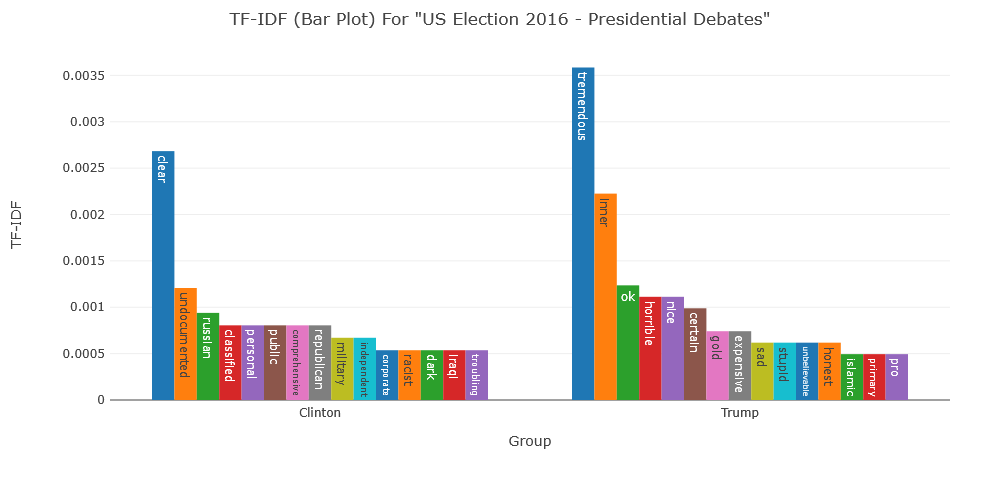
Democracy Viewer is an open-source text mining platform that democratizes computational analysis of large-scale humanities and social science corpora. It brings together curated collections of public texts, including U.S. Congressional records and user-uploaded datasets, and makes them accessible through methods such as word counts, TF-IDF, and word embeddings. By supporting both distant and close reading, the project allows users to explore how language around power, identity, and civic life has shifted across time and political context.
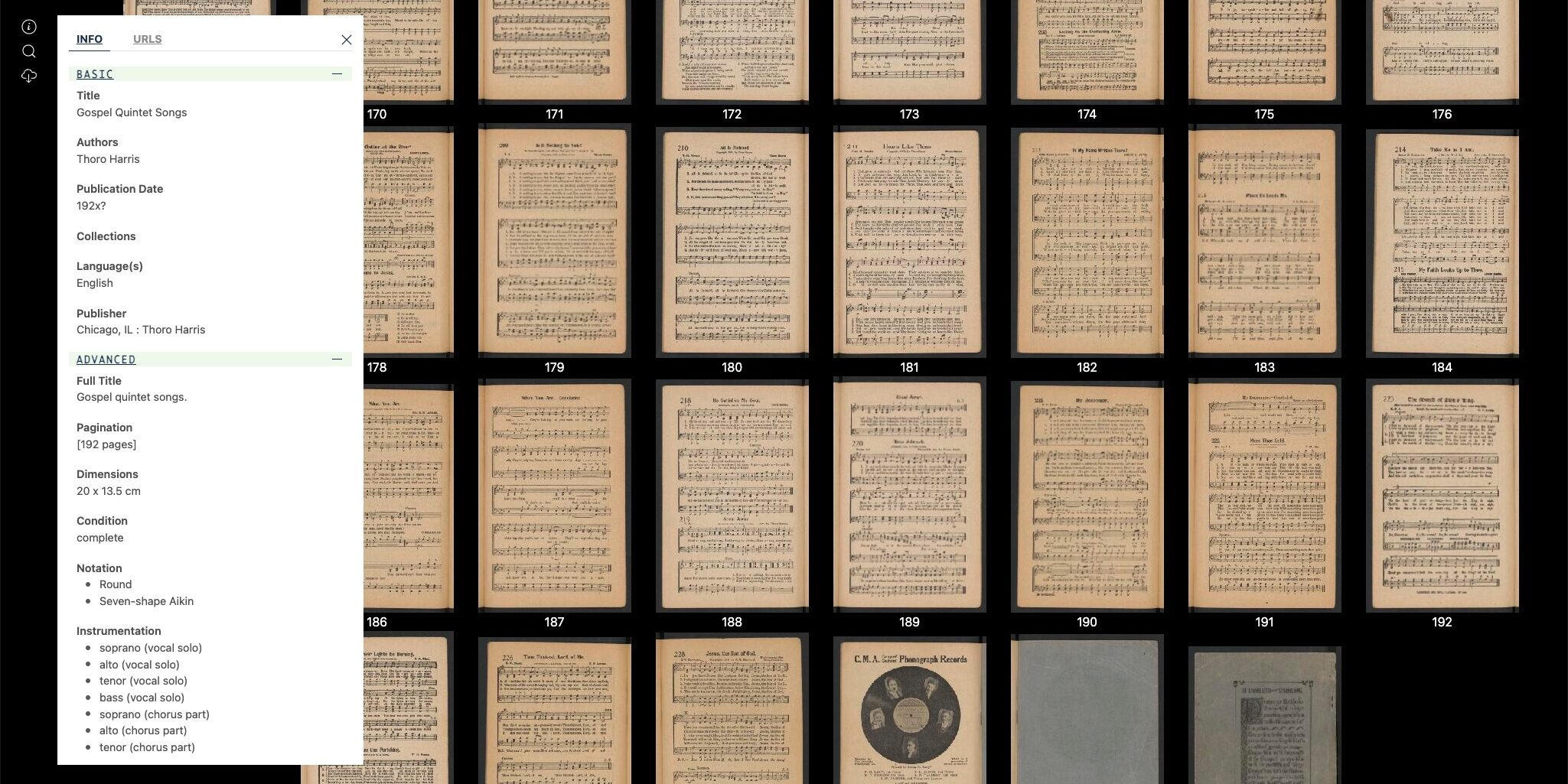
The Sounding Spirit Digital Library is an open-access digital archive and research platform that features over 1,250 historical songbooks and hymnals of sacred music from the American South. It documents shape-note singing traditions, spirituals, and gospel music spanning from 1850 to 1925, and offers a unique opportunity to ask how people navigated race, religion, and place over a century ago.
A multi-year research initiative housed at the Carsey-Wolf Center at the University of Santa Barbara investigating the ways that AI tools are transforming film, television, gaming, music, and other forms of digital entertainment. Dr. Porst’s project, “Regulating Authorship and Creativity: IP Law, AI, and Hollywood,” is one of the fourteen projects in the initiative.
Mapping Senufo is a born-digital publication project and research platform that critically examines data surrounding arts identified as Senufo. It surfaces discrepancies between historical sources as well as long-held assumptions across art history, curation, and collecting. By foregrounding gaps and inconsistencies in the archive, the project allows us to ask how knowledge about African art has been constructed, asserted, and codified over time.
Democracy Viewer is an open-source text mining platform that democratizes computational analysis of large-scale humanities and social science corpora. It brings together curated collections of public texts, including U.S. Congressional records and user-uploaded datasets, and makes them accessible through methods such as word counts, TF-IDF, and word embeddings. By supporting both distant and close reading, the project allows users to explore how language around power, identity, and civic life has shifted across time and political context.
The Sounding Spirit Digital Library is an open-access digital archive and research platform that features over 1,250 historical songbooks and hymnals of sacred music from the American South. It documents shape-note singing traditions, spirituals, and gospel music spanning from 1850 to 1925, and offers a unique opportunity to ask how people navigated race, religion, and place over a century ago.
A multi-year research initiative housed at the Carsey-Wolf Center at the University of Santa Barbara investigating the ways that AI tools are transforming film, television, gaming, music, and other forms of digital entertainment. Dr. Porst’s project, “Regulating Authorship and Creativity: IP Law, AI, and Hollywood,” is one of the fourteen projects in the initiative.
Lauren Klein (Data & Decision Sciences and English) with Tanvi Sharma, Jay Varner (ECDS), Margy Adams (PhD ‘26, English), Shiyao Li (PhD ‘26, Computer Science), Nicholas Yang, Dan Jutan, Jianing Fu, Anna Mola (BA ‘22, Computer Science and Visual Art), Zhou Fang (BA ‘22, Quantitative Sciences), Yang Li (ECDS), and Silas Munro. Data by Design: Visualization and Power from Abolition to the Dawn of Data Science (MIT Press, 2026) and online at dataxdesign.io.
Michael Page (Environmental Sciences), Younah Kang, Stewart Varner, Keeheon Lee, Alexander Cors (ECDS), Aryabrata Basu, Kimberly Durante, and Ian Burr (ECDS). “Methods and Evaluation in the Historical Mapping of Cities,” The International Archives of the Photogrammetry, Remote Sensing and Spatial Information Sciences XLVIII-4-W7-2023 (June 2023): 155–60.
Em Nordling (PhD ‘26, English), “Post45 Data Collective Tabular Data Style Guide,” Post45 Data Collective (May 2026).
Lauren Klein (Data & Decision Sciences and English) with Tanvi Sharma, Jay Varner (ECDS), Margy Adams (PhD ‘26, English), Shiyao Li (PhD ‘26, Computer Science), Nicholas Yang, Dan Jutan, Jianing Fu, Anna Mola (BA ‘22, Computer Science and Visual Art), Zhou Fang (BA ‘22, Quantitative Sciences), Yang Li (ECDS), and Silas Munro. Data by Design: Visualization and Power from Abolition to the Dawn of Data Science (MIT Press, 2026) and online at dataxdesign.io.
Michael Page (Environmental Sciences), Younah Kang, Stewart Varner, Keeheon Lee, Alexander Cors (ECDS), Aryabrata Basu, Kimberly Durante, and Ian Burr (ECDS). “Methods and Evaluation in the Historical Mapping of Cities,” The International Archives of the Photogrammetry, Remote Sensing and Spatial Information Sciences XLVIII-4-W7-2023 (June 2023): 155–60.
Em Nordling (PhD ‘26, English), “Post45 Data Collective Tabular Data Style Guide,” Post45 Data Collective (May 2026).